Best Expandable LiFePO4 Power Stations for Multi-Day Blackouts (6kWh to 60kWh)
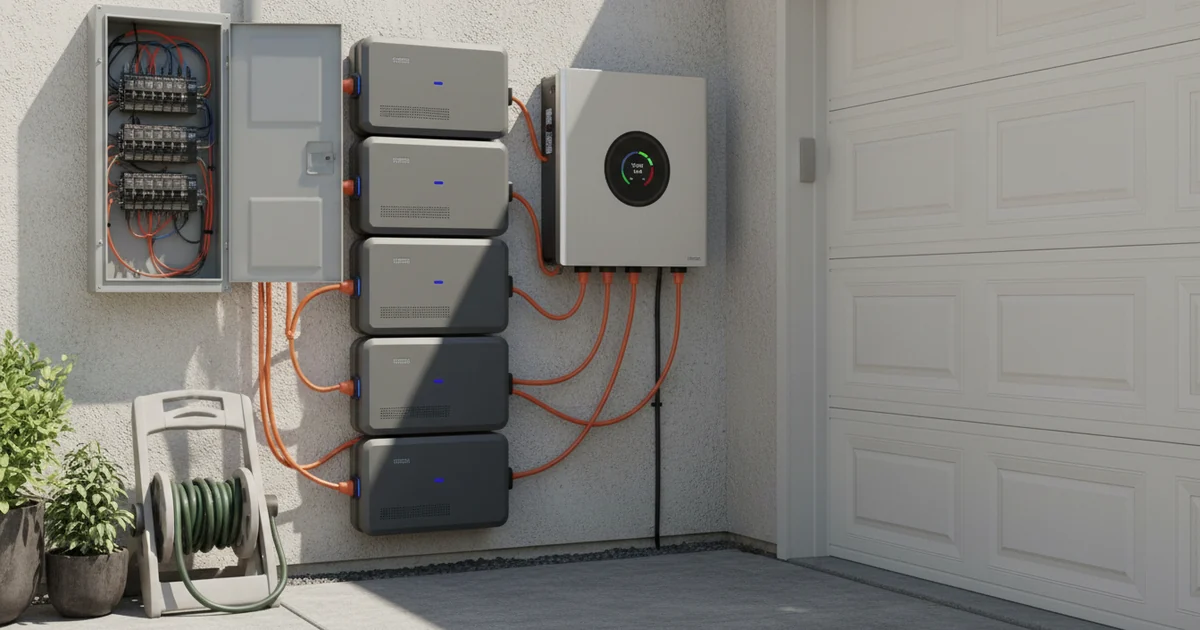
Multi-day blackouts quickly exhaust fixed 2kWh stations when winter clouds stall solar charging. Expandable LiFePO4 ecosystems let you start modestly and stack extra packs up to 10kWh-61kWh. EcoFlow DELTA Pro Ultra X leads whole-home 12kW scaling, Anker SOLIX F3800 Plus leads wheeled 240V expansion, and EcoFlow DELTA 2 Max leads budget 120V stacking.
01 How Much Battery Storage Does a 72-Hour Home Outage Actually Require?
Running a kitchen refrigerator (1.8 kWh/day), chest freezer (1.2 kWh/day), gas furnace blower (2.5 kWh/day), lights, and internet consumes roughly 6 to 8 kWh every 24 hours.
Without daytime solar recharge or a gas backup generator, surviving three full days requires 18 to 24 kWh of stored LiFePO4 energy. Starting with an expandable inverter avoids throwing away your first battery when your needs grow.
| Expandable System | Base Capacity | Max Single-Stack | Max AC Output | Voltage |
|---|---|---|---|---|
| EcoFlow DELTA Pro Ultra X | 12.29 kWh | 61.4 kWh (184kWh 3x) | 12,000W | 120V / 240V |
| Anker SOLIX F3800 Plus | 3.84 kWh | 19.2 kWh (53.8kWh 2x) | 6,000W | 120V / 240V |
| BLUETTI AC500 + B300S | 6.14 kWh | 18.4 kWh | 5,000W | 120V (240V Pair) |
| EcoFlow DELTA 2 Max | 2.05 kWh | 10.2 kWh | 2,400W | 120V |
02 Which Modular Ecosystem Gives the Best Cost Per Kilowatt-Hour?
Expansion batteries cost less per watt-hour than buying separate standalone inverters because you do not pay twice for screens, MPPT boards, and AC receptacles.
The EcoFlow DELTA Pro Ultra X stacks sleek 6.14kWh modules vertically on a rolling trolley. For mid-budget 240V backup, the Anker SOLIX F3800 Plus adds 3.84kWh expansion packs, while the BLUETTI AC500 + B300S scales modularly with self-heating LFP cells.
- Check floor footprint and trolley weight: 18kWh of LiFePO4 batteries weighs roughly 350 to 420 lbs.
- Always power off inverters before plugging or unplugging high-current DC expansion cables.
- Feed your whole breaker panel cleanly using a 50A Reliance PBN50 Inlet Box.
03 How Should You Balance Extra Batteries vs Solar Panels for Multi-Day Storms?
Buying 30kWh of batteries without solar panels still leaves you empty on Day 4 of a hurricane outage. Pairing 6kWh to 12kWh of storage with 1,600W to 3,200W of solar input creates a self-renewing loop.
Use our NEC 220 Home Load Sizer to calculate your exact daily kWh burn before deciding how many expansion packs to order.
NEC 220 mandates calculating 125 percent of continuous load plus the single largest motor startup surge. Unassisted central air conditioners draw 3 to 5 times running current during startup.
- Essential home backup averages 6 to 8 kWh per day, requiring expandable storage for multi-day storms.
- EcoFlow DELTA Pro Ultra X scales up to 61.4kWh per inverter with 12kW continuous 240V power.
- Anker SOLIX F3800 Plus and BLUETTI AC500 offer reliable modular expansion with LFP longevity.
Frequently Asked Questions
Q: Can I mix different brands of expansion batteries on EcoFlow or BLUETTI inverters?
No. Proprietary BMS communication cables require matching OEM expansion batteries (such as EcoFlow or BLUETTI B300S/B300K packs) to balance cell voltages safely.
Q: Do expansion batteries recharge at the same time as the main power station?
Yes. The main inverter BMS automatically balances charge and discharge across all connected expansion packs in parallel.
Q: Can expandable power stations stay stored in an unheated garage in winter?
LiFePO4 cells can discharge down to -4F, but charging below 32F damages lithium plating unless the pack includes self-heating heaters (like BLUETTI B300S or EcoFlow DPU batteries).