Best Surge Protectors for Generator Panels & RVs (NEC 230.67 & EMS Guide)
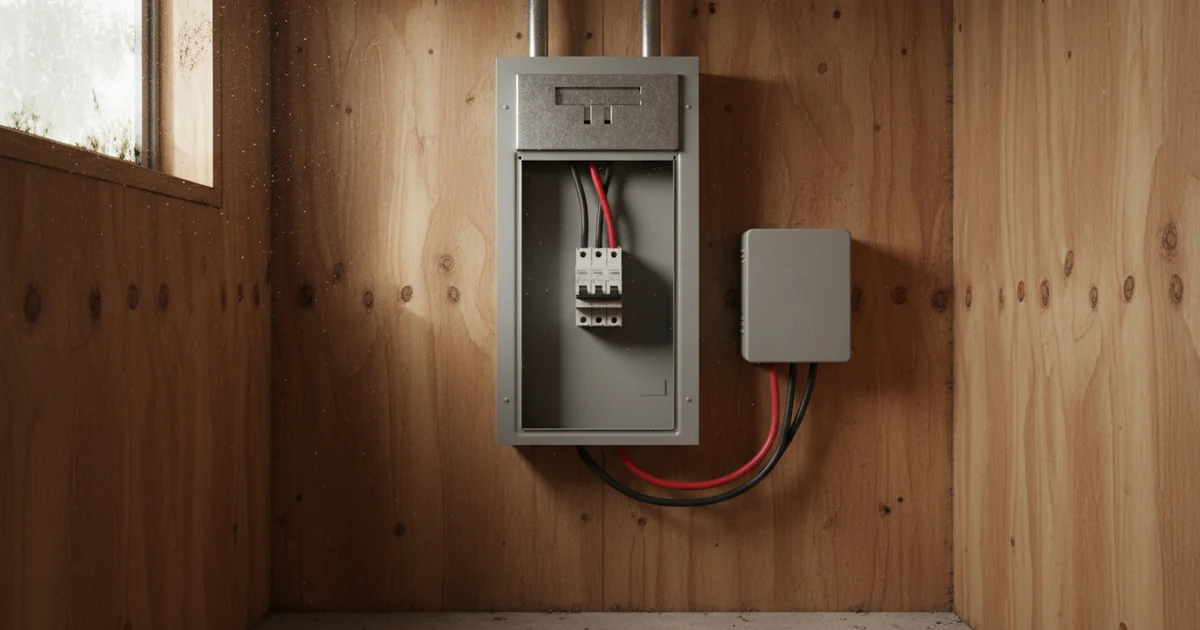
The most dangerous electrical moment of a blackout happens when utility power snaps back on, sending 1,000V+ switching transients down home lines, or when a loose generator neutral swings voltage past 160V. Pair a NEC 230.67 Type 1/Type 2 whole-home SPD on your main breaker panel with a Progressive Industries EMS-PT50X on 50A RVs.
01 Why Do Appliance Boards Fry When Grid Power Restores After a Storm?
When utility crews re-close neighborhood feeder transformers after storm repairs, inductive switching surges shoot down residential service drops. Modern inverter refrigerators, mini-splits, and gas furnace control boards fail instantly without panel-level clamping.
NEC Article 230.67 now requires a UL 1449 Type 1 or Type 2 Surge Protective Device (SPD) on new and replaced residential service panels, mounted as close as possible to the top main breaker.
| Protection Tier | Hardware Type | What It Stops | Where It Installs |
|---|---|---|---|
| Main Home Panel | Type 1 / Type 2 Whole-Home SPD (50kA-80kA) | Lightning & Utility Restoration Spikes | Adjacent to Main 200A Breaker |
| 50A RV / Cord Inline | Progressive Industries EMS-PT50X | High/Low Voltage, Open Neutral & Surges | Between Pedestal/Generator & 50A Cord |
| Sensitive Electronics | Pure Sine <10ms UPS (EcoFlow DELTA 3 Plus) | Brownouts, Sags & Generator Frequency Dip | Desk / Furnace / Server Outlet |
02 How Does an Inline EMS Protector Differ From a Standard Surge Strip?
A simple MOV surge strip sacrifices itself against microsecond lightning spikes, yet it will sit silently while a loose neutral wire feeds 180 volts into your 120V microwave for ten seconds.
An active electronic management system like the Progressive Industries EMS-PT50X continuously measures L1/L2 voltage, frequency, and ground continuity, opening its heavy relays in milliseconds if power drifts outside 104V-132V.
- Keep SPD lead wires short and straight (under 12 inches) inside your main panel to lower let-through clamping voltage.
- On floating-neutral inverters with an RV EMS, insert a NEMA 5-15P bonding plug to satisfy the EMS ground check.
- Always turn off main branch loads before switching back from generator power to utility power.
03 Can a Whole-Home Surge Protector Fix High THD From an Open-Frame Generator?
No. Surge protectors clamp high-voltage peaks above ~300V-600V; they do not filter 15%-23% Total Harmonic Distortion (THD) from non-inverter alternators. If your furnace control board or UPS rejects dirty power, use an inverter generator (<3% THD) or a LiFePO4 battery.
- NEC 230.67 mandates UL 1449 Type 1 or Type 2 surge protection on residential service panels.
- Progressive Industries EMS-PT50X adds active open-neutral and high/low voltage cutoff for 50A RVs.
- Whole-home SPDs clamp restoration spikes but cannot convert high-THD conventional generator output into pure sine wave.
Frequently Asked Questions
Q: Where should a whole-home SPD breaker be placed in a panel with a generator interlock?
Mount the 2-pole SPD breaker in the top slot directly opposite the 50A generator backfed breaker (closest to the main utility lugs) using short, untwisted leads.
Q: Does a whole-home surge protector work while running on a portable generator?
Yes. Because it connects directly to the panel busbars, it remains active whether the busbars are fed by utility lines or your 50A generator inlet.
Q: Do I still need plug-in surge strips if I have a whole-home SPD?
Yes, for layered defense. Panel SPDs knock down massive exterior surges to ~600V, while point-of-use UPS units or strips protect delicate TVs and computers downstream.