EcoFlow DELTA Pro Ultra X vs Anker SOLIX F3800 Plus: 240V Whole-Home Shootout
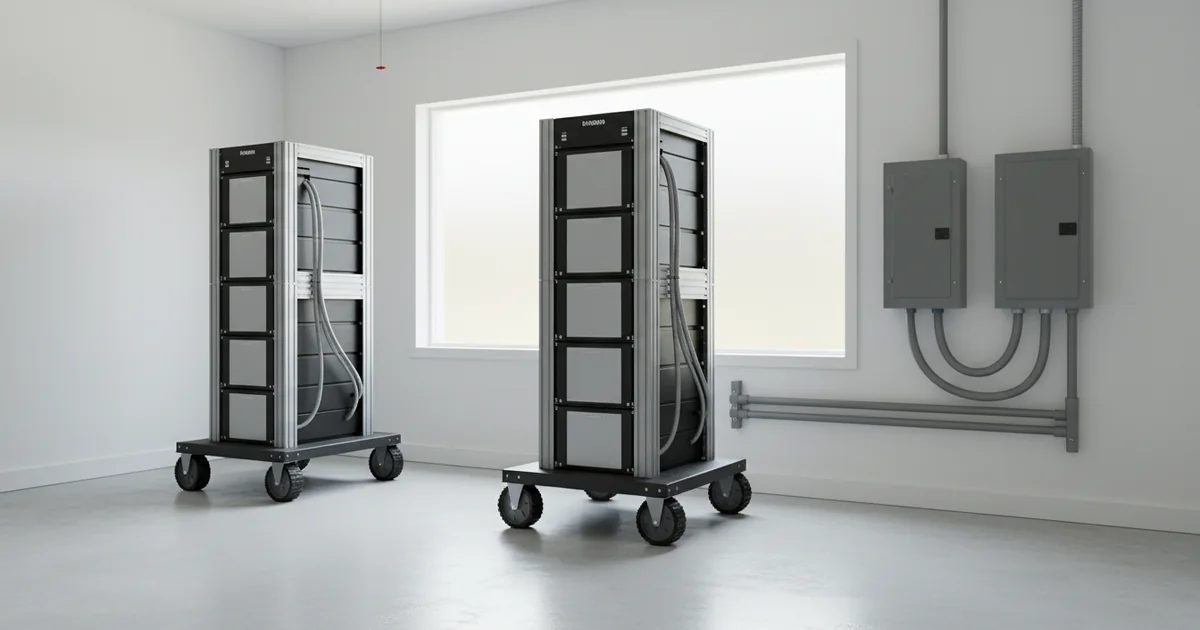
The EcoFlow DELTA Pro Ultra X wins for whole-home 50A service with 12,000W continuous output, 12.29kWh starter capacity, and 10,000W dual-500V solar MPPT. The Anker SOLIX F3800 Plus wins for lower entry footprint at 136 lbs with 6,000W split-phase output and 3,200W solar.
01 How Do DELTA Pro Ultra X and SOLIX F3800 Plus Compare on 240V Power?
Both systems eliminate noisy outdoor engines by outputting true 120V/240V split-phase electricity through NEMA 14-50R and L14-30R sockets directly into a home inlet box.
The EcoFlow DELTA Pro Ultra X doubles continuous output to 12,000W (50A @ 240V) with two 6.14kWh batteries, while the Anker SOLIX F3800 Plus delivers 6,000W (25A @ 240V) on rolling wheels.
| Specification | EcoFlow DELTA Pro Ultra X | Anker SOLIX F3800 Plus |
|---|---|---|
| Base / Max Capacity | 12.29kWh / 61.4kWh (184kWh 3x) | 3.84kWh / 19.2kWh |
| Continuous / Surge 240V | 12,000W / 18,000W | 6,000W / 12,000W |
| Max Solar PV Input | 10,000W (Dual 80-500V) | 3,200W (Dual 11-165V) |
| 240V Receptacles | 14-50R (50A) + L14-30R + 50A Port | 14-50R (50A) + L14-30R |
| Starter Weight | 298.7 lbs (3 Modules) | 136.0 lbs (All-in-One) |
| ReaLoad Score | 9.0 / 10 | 8.1 / 10 |
02 Can Either System Start a 4-Ton Central Air Conditioner and Well Pump?
Starting a 3.5-ton to 5-ton HVAC compressor alongside a 240V well pump pushes 6kW inverters close to surge ceilings unless you install an A/C soft-starter.
With 12,000W continuous and 18,000W peak capacity, the EcoFlow DELTA Pro Ultra X handles heavy HVAC compressors and electric clothes dryers smoothly, especially paired with a Micro-Air EasyStart Flex.
- Anker SOLIX F3800 Plus supports direct 240V generator pass-through charging for storm recovery.
- EcoFlow DPUX accepts 10,000W of high-voltage rooftop solar strings without extra charge controllers.
- Compare all telemetry rows on our DPUX vs F3800 Plus comparison.
03 Which Solar Ecosystem Scales Better for Multi-Day Blackouts?
Solar PV voltage limits determine how many roof or ground panels you can wire easily. EcoFlow DPUX dual 500V MPPT channels allow long series strings with thin 10 AWG PV wire.
Anker F3800 Plus upgrades the original F3800 from 2,400W to 3,200W dual-165V solar input, making 8-panel ground arrays fast to deploy during summer hurricanes.
- EcoFlow DELTA Pro Ultra X outputs 12,000W continuous 240V and accepts 10,000W solar PV.
- Anker SOLIX F3800 Plus rolls at 136 lbs with 6,000W output, 12,000W surge, and 3,200W solar input.
- Both systems feature Factory Floating Neutrals for clean NEC 250.20 interlock and inlet hookups.
Frequently Asked Questions
Q: Does the EcoFlow DELTA Pro Ultra X need two batteries for full 12,000W output?
Yes. Pairing the EF-DU-001 inverter with at least two 6,144Wh batteries (12.29kWh total) enables the full 12,000W continuous split-phase rating.
Q: Can the Anker SOLIX F3800 Plus recharge from a gas generator while powering my house?
Yes. The F3800 Plus supports 240V generator pass-through charging, allowing a backup generator to top up the battery during cloudy weeks.
Q: What rebates apply to 240V battery systems now that the 30% IRS Section 25D credit expired after 2025?
Residential clean energy credits under IRS Section 25D expired after December 31, 2025 (P.L. 119-21). Check active state or electric utility battery storage rebates in your service territory.