Smart Home Panel vs 50A Inlet Box & Interlock for Solar Power Stations
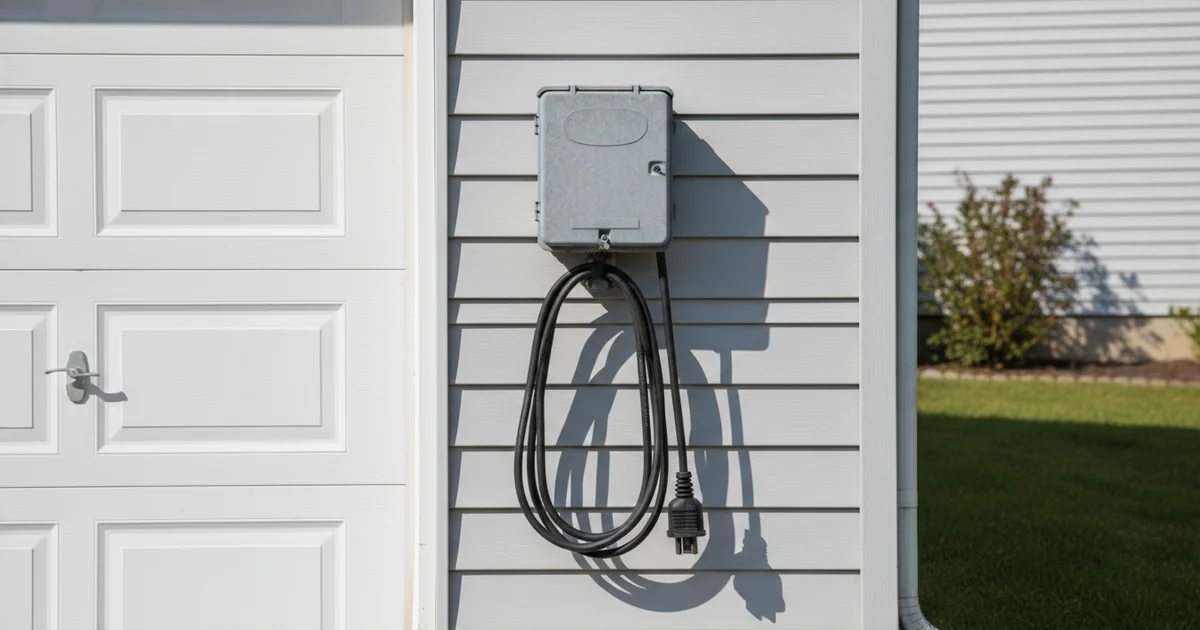
A 50A Reliance inlet box and interlock kit cost far less to install and let you feed your panel from either a 240V solar battery or a tri-fuel gas generator. Choose a Smart Home Panel only when you want automated 20ms failover, circuit-by-circuit app shedding, and solar TOU scheduling.
01 How Do Smart Home Panels Differ from a 50A Inlet Box and Interlock?
A mechanical interlock plate and 50A Reliance Controls PBN50 Inlet Box connect your whole main breaker panel using a standard 6-AWG NEMA 14-50P to SS2-50R cord. During an outage, you flip breakers manually.
A Smart Home Panel wires permanently between your main service and critical branch circuits, switching automatically in 20ms and shedding heavy loads via smartphone.
| Feature | 50A Inlet + Interlock | Manual Transfer Switch | Smart Home Panel |
|---|---|---|---|
| Switchover Speed | Manual (2 to 5 min) | Manual (1 to 2 min) | Automatic (20ms) |
| Gas Generator Support | Universal (Any 240V Unit) | Universal (Any Unit) | Brand-Locked |
| App Circuit Shedding | No (Manual Breakers) | No (Toggle Switches) | Yes (Automated) |
| Neutral Switching | Interlock Uses Main Bond | Optional Switched Neutral | Manufacturer Managed |
When connecting to a home panel through a non-switched neutral interlock, the generator neutral must float. A double-bonded neutral creates dangerous parallel return current on equipment grounds.
02 Why Do Many Homeowners Prefer a 50A Inlet or Reliance Pro/Tran2?
Smart panels lock you into one battery brand and cost significantly more in licensed electrician labor. If an ice storm drains your battery after three sunny days turn cloudy, a universal 50A inlet lets you wheel out a tri-fuel generator immediately.
For subpanel isolation without modifying main busbars, a 10-circuit Reliance Pro/Tran2 Transfer Switch cleanly feeds 240V circuits from the EcoFlow DELTA Pro Ultra X.
- Solar power stations ship with Floating Neutrals, matching standard non-switched interlock kits under NEC 250.20.
- Check conductor gauge with our Cord Voltage Drop Calculator.
- Never use dual-male suicide cords; always terminate in a recessed SS2-50P outdoor inlet.
03 When Is a Smart Home Panel Worth the Extra Electrician Labor?
Homes with frequent utility brownouts, medical equipment, or time-of-use utility rate arbitrage recover value from automated circuit control.
If your primary goal is storm resilience rather than daily peak-shaving, pair a 50A 6-AWG pure copper cord with an exterior inlet and save thousands on panel hardware.
- A 50A inlet box and mechanical interlock work reliably with both 240V solar batteries and gas generators.
- Smart home panels deliver 20ms automatic failover and app load shedding but lock into one brand.
- Floating-neutral power stations connect cleanly to standard interlocks and Reliance transfer switches.
Frequently Asked Questions
Q: Can I plug a 240V power station into a standard 50A generator interlock?
Yes. Units with a NEMA 14-50R 120V/240V split-phase outlet and Floating Neutral plug into an SS2-50P inlet box using a 6/3+8/1 AWG cord.
Q: What happens if I only have a 120V power station and a 240V interlock?
A 120V station cannot power 240V double-pole breakers and should never be bridged across two panel legs if multi-wire branch circuits share a neutral. Use a dedicated 120V transfer switch like the Reliance TF151W instead.
Q: Should a licensed electrician install my 50A inlet box or transfer switch?
Yes. Panel work requires proper torque, breaker interlocking per NEC 702.5, and local permit inspection.